
Architects like Jones, Wren, Vanbrugh and Hawksmoor may dominate architectural history, but the field they inhabited was the product of an earlier period.
Speaker:
Steven Brindle
Architects like Jones, Wren, Vanbrugh and Hawksmoor may dominate architectural history, but the field they inhabited was the product of an earlier period. The form of buildings, the way they were conceived and used, the fundamental design language, and the materials and techniques utilised were established in the seventeenth century by craftspeople.
This seminar explores how this ‘building revolution’ was influenced by social, economic, technical and climatic/environmental factors, including the transition from timber-framing to thin-walled brick construction, changes in the shape of households, and changes in the means of heating.
Speaker Bio:
Steven Brindle is a freelance historian specialising in the history of architecture and engineering. He retired from English Heritage last year, having worked there for 36 years as an historian and an Inspector of Ancient Monuments. He has published extensively on these subjects, with major books including Brunel, the Man who Built the World (2005); Windsor Castle, A Thousand Years of a Royal Palace (2018, as editor); and London, Lost Interiors (2024). This talk relates his book Architecture in Britain and Ireland, 1530-1830 (Paul Mellon Centre, 2023), which was the co-winner of the Alice Davis Hitchcock Medallion for 2024.
Registration:
Register below, or via email to website@sahgb.org.uk.
Location
This SAHGB - IHR seminar will be a hybrid event, taking place online and in person at Senate House.
Updated Location: SH243 (Senate House, South Block, Second Floor Malet St, London WC1E 7HU).
All Events

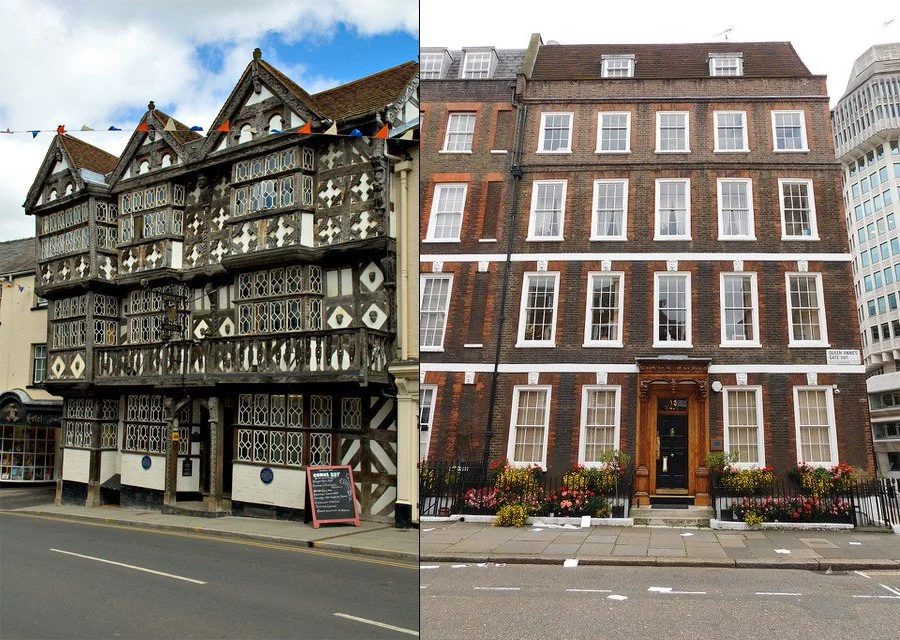


Image: Wikimedia Commons